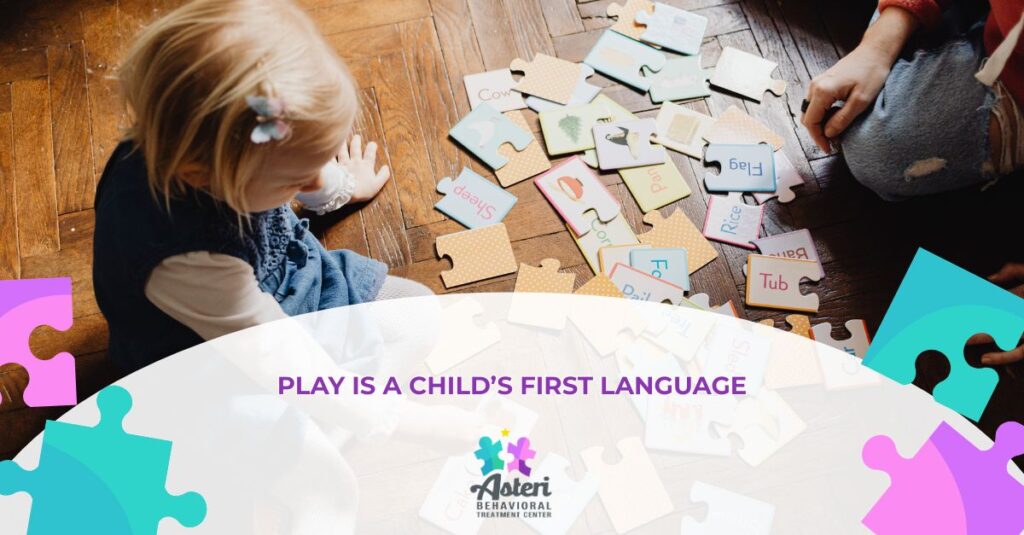
As a parent, you’ve likely watched your child get completely lost in play. Whether they’re stacking blocks, hosting a tea party for stuffed animals, or simply running around the backyard, these moments are more than just fun and games—they are the first steps in building essential social skills. Play is your child’s first language—it’s how they begin to understand and interact with the world around them.
Through play, children develop the foundational social skills that will shape their relationships for years to come. It’s in these seemingly simple activities that they learn to share, take turns, understand others’ feelings, and manage their own emotions. This article will explore why play is so crucial for social development and how professionals use it to help children build these essential life skills.
At Asteri, we recognize that every family’s culture shapes how a child plays and interacts. Different cultures have unique values, traditions, and ways of communicating. By understanding and respecting your family’s specific cultural background, we can create a more effective and empathetic approach to supporting your child’s development through play.
The Building Blocks of Social Skills
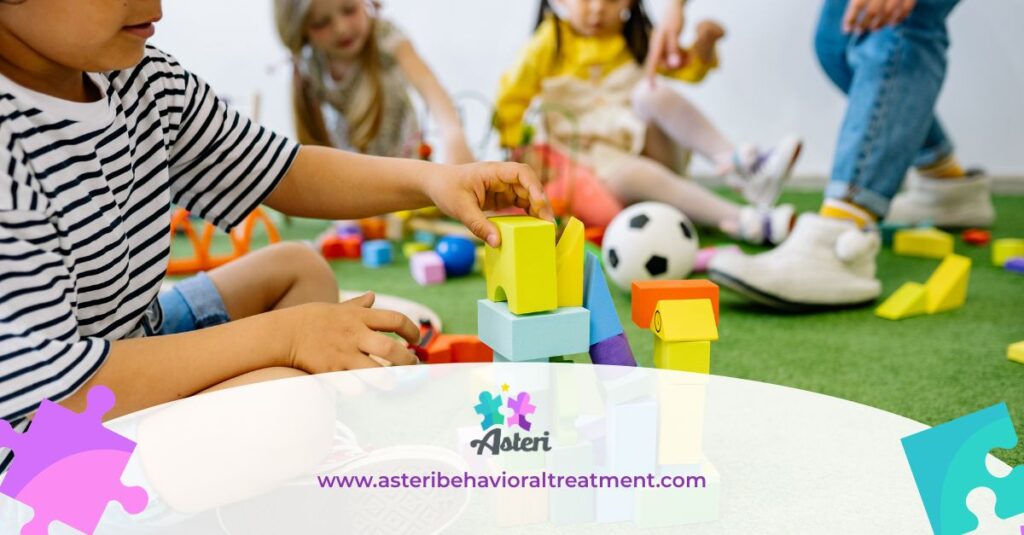
Play is not a single activity but a rich and complex process. Within it, children practice several key behaviors that are the bedrock of social interaction. Understanding these components can help you see the incredible learning happening during your child’s playtime.
Joint Attention: Sharing the Moment
Joint attention is the shared focus of two individuals on an object. It happens when your child points at a dog and you both look at it together, or when you both giggle at a block tower tumbling down. This skill is fundamental for social connection. It shows that your child is aware of others and wants to share experiences with them. Through play, children learn to initiate and respond to these shared moments, which is a vital precursor to conversation and collaborative activities.
Imitation: Learning by Watching
Have you ever seen your child mimic your gestures, facial expressions, or the way you talk on the phone? This is imitation, and it’s one of the most powerful ways children learn. When children play, they constantly imitate the actions of their friends, siblings, and parents. This “copying” helps them understand social norms, learn new skills, and figure out how to behave in different situations. It’s their way of trying on different roles and understanding other people’s perspectives.
Turn-Taking: The Rhythm of Conversation
From rolling a ball back and forth to taking turns adding blocks to a tower, turn-taking is a simple yet profound concept learned through play. This skill teaches patience, cooperation, and the basic rhythm of social interaction. It’s the foundation for conversational skills, where one person speaks and the other listens before responding. Games that involve waiting for a turn help children practice self-control and respect for others’ contributions, which are essential for building healthy friendships.
Emotional Regulation: Managing Big Feelings
Play provides a safe space for children to experience and express a wide range of emotions. They might feel excitement when they win a game, frustration when a puzzle piece doesn’t fit, or sadness when playtime is over. Through these experiences, they learn to identify their feelings and develop strategies to manage them. For example, a child might learn to take a deep breath when frustrated or ask for a hug when upset. This ability to regulate emotions is critical for navigating social challenges and maintaining positive relationships.
How Therapists Use Play to Nurture Social Skills
When a child needs extra support with social skills, therapists often turn to play-based approaches. These methods are effective because they meet the child where they are, using their natural language of play to teach and reinforce important skills. There are two main approaches therapists often use.
Structured Play
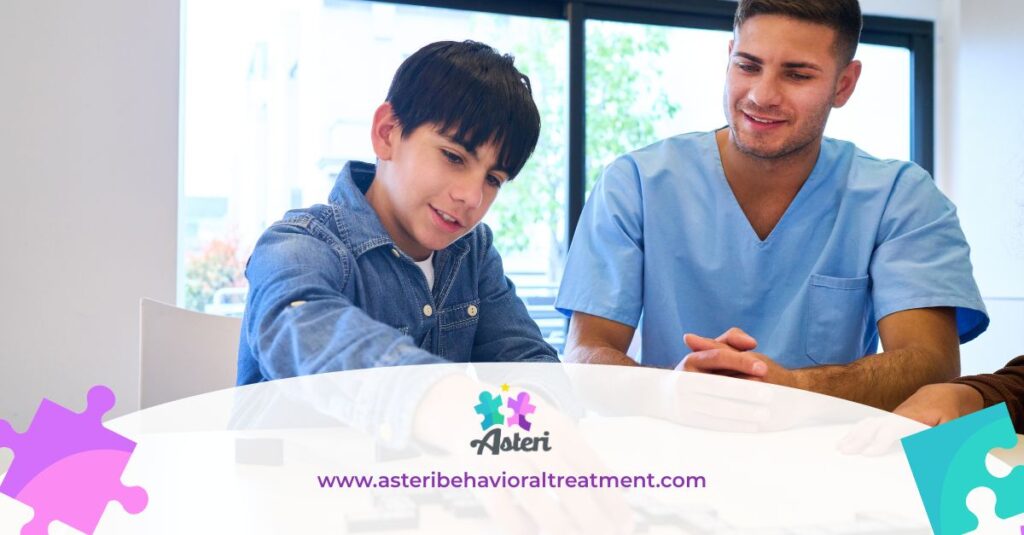
Structured play involves activities with clear rules and goals. Board games, building sets with instructions, and organized sports are all examples of structured play. A therapist might use a board game to teach a child about turn-taking, following rules, and handling both winning and losing gracefully. These activities provide a predictable framework that can make it easier for some children to practice social skills. The therapist can guide the child through the activity, offering support and encouragement as they navigate the social demands of the game.
Naturalistic Play
Naturalistic play, or child-led play, is more spontaneous and follows the child’s interests. In this approach, the therapist joins the child in whatever they are doing—be it playing with dolls, drawing, or building a fort—and uses the opportunity to model and encourage social skills. For instance, if a child is playing with toy cars, the therapist might introduce a second car and model how to share the road or take turns racing. This method is powerful because it allows children to learn in a context that is meaningful and motivating to them, making the skills more likely to generalize to other situations.
At Asteri, we integrate both structured and naturalistic play into our sessions, always with a deep respect for the child’s and family’s cultural context. We understand that play can look different across cultures, and we tailor our approach to align with your family’s values and traditions. This ensures that the skills your child learns are relevant and can be easily integrated into your daily life.
Supporting Your Child’s Social Journey
Play is far more than just a way for children to pass the time. It is a vital and dynamic process through which they build the social and emotional foundations for a happy and connected life. By understanding the power of joint attention, imitation, turn-taking, and emotional regulation, you can better appreciate the incredible learning that happens every time your child plays.
Whether through structured games or imaginative free play, these experiences are shaping your child’s ability to form friendships, communicate effectively, and navigate the social world. If you ever have concerns about your child’s social development, remember that support is available. Professionals can provide guidance and strategies that are tailored to your child’s unique needs and your family’s cultural values.
Encouraging play is one of the greatest gifts you can give your child. Additionally, by valuing their playtime, you are helping them master their first language and build the skills they need to thrive.
