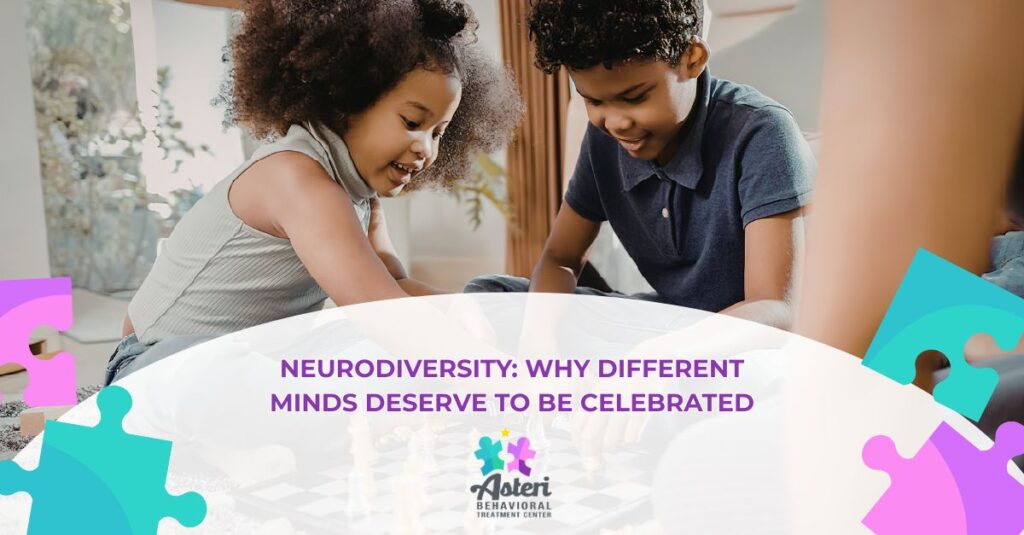
Every brain works differently. Some kids think in pictures, others hyperfocus on the things they love, and many process the world in ways that don’t fit neatly into traditional classroom molds. Neurodiversity is the idea that these differences aren’t defects—they’re natural variations in how the human brain functions. Understanding neurodiversity in children helps parents recognize these differences as strengths rather than limitations.
For parents raising neurodivergent children, understanding this concept can be genuinely life-changing. It shifts the conversation from “what’s wrong with my child?” to “how does my child’s mind work best?” That single reframe has the power to reshape a child’s confidence, identity, and sense of belonging.
What Does Neurodiversity Actually Mean?
The term “neurodiversity” was coined by sociologist Judy Singer in the late 1990s. It describes the natural variation in human brain function and behavior—including conditions like ADHD, autism, dyslexia, dyspraxia, and more. This broader definition is essential when discussing neurodiversity in children, because early understanding leads to better support and acceptance at home and school.
The key distinction here is between two very different frameworks: the deficit model and the strength-based model.
The deficit model focuses on what a neurodivergent person can’t do. It frames conditions as problems to be fixed, managed, or overcome. For decades, this was the dominant lens—and for many families, it still is.
The strength-based model flips that. It acknowledges challenges while actively identifying and building on a person’s unique abilities. A child who struggles with reading might have exceptional spatial reasoning. A teenager with ADHD might have extraordinary creativity and drive. A child on the autism spectrum might possess deep expertise in a subject they’re passionate about.
Research backs this up. Studies show that neurodivergent individuals often demonstrate heightened abilities in pattern recognition, creative problem-solving, and sustained focus in areas of interest. When we apply these insights to neurodiversity in children, we begin to design environments that nurture strengths instead of focusing only on deficits.
Why Labels Can Liberate (When Used Right)
There’s a common fear among parents that a diagnosis will become a ceiling—a label their child can’t escape. But for many neurodivergent people, a diagnosis is actually a door.
It gives language to experiences that were previously confusing or isolating. It opens access to support, accommodations, and communities of people who truly understand. And critically, it allows a child to understand themselves better.
Self-knowledge is the foundation of self-advocacy. When a child understands how their brain works, they can start to communicate their needs, ask for help without shame, and recognize their own strengths. That’s not a limitation—that’s power.
How Parents Can Foster Self-Advocacy at Home
Self-advocacy isn’t something children are born with. It’s a skill, and like any skill, it develops with practice and encouragement. Encouraging self-advocacy is especially important when supporting neurodiversity in children, because it helps them explain what they need and build confidence early in life.
Here are a few ways parents can help:
- Use affirming language. Talk about your child’s brain as different, not broken. Replace phrases like “why can’t you just focus?” with “let’s figure out what helps you concentrate best.”
- Involve them in decisions. When discussing school accommodations or therapy goals, include your child in the conversation. Even young children benefit from being asked what feels helpful.
- Celebrate effort and strategy, not just outcomes. Praise the way your child approached a problem, not just whether they got the right answer.
- Connect them with role models. Exposure to neurodivergent adults who are thriving—in careers, relationships, and communities—can be profoundly motivating. Books, podcasts, and YouTube channels created by and for neurodivergent people are a great starting point.
- Normalize asking for help. Frame support as a tool, not a crutch. Everyone has things they need help with. Getting that help is a strength.
The Role of Schools and Communities
Schools play a massive role in shaping how neurodivergent children see themselves. When a child spends years being pulled out of class, falling behind, or being told to “try harder,” it leaves a mark. But schools that embrace neurodiversity—through inclusive teaching practices, sensory-friendly spaces, and staff training—can completely transform a student’s experience.
One powerful example of this is Neurodiversity Celebration Week, a global initiative that originated in the UK and has since expanded worldwide. Events like this highlight the importance of neurodiversity in children by teaching peers, teachers, and families to value different learning styles.
Community initiatives matter just as much. Local parent groups, social skills programs, and neurodiversity-affirming therapy practices all contribute to a child’s sense of belonging. When a child sees that their community makes space for them—genuinely, not just in theory—it reinforces the message that they belong here.
Building Identity and Community
For neurodivergent children, identity formation can be complicated. Many spend years masking—suppressing natural behaviors to fit in—which takes a serious toll on mental health and self-esteem. Helping a child build a positive identity around their neurodivergence early can reduce the need to mask and strengthen their overall wellbeing.
This doesn’t mean every aspect of a child’s identity should revolve around their diagnosis. It means their neurodivergence is part of who they are, and it’s a part worth understanding and even celebrating.
Some ways to support this:
- Find their community. Online and in-person groups for neurodivergent children and teens offer connection with peers who “get it.” The relief of finding your people is hard to overstate.
- Explore their interests deeply. Many neurodivergent children develop intense passions. Rather than redirecting these, lean in. Deep interests build confidence, skills, and social connections.
- Share their history. Many remarkable thinkers, scientists, artists, and leaders throughout history are believed to have been neurodivergent. Helping children see themselves in a larger story can be quietly powerful.
The Asteri Approach
At Asteri, we take experience and innovation seriously. Our professionals draw on their extensive backgrounds when designing your child’s treatment—while always tailoring that treatment to your child’s specific needs. There’s no one-size-fits-all approach here, because your child isn’t one-size-fits-all.
Many of us come from families like yours. We’ve been there, and we understand what’s at stake. Our strength-based approach means we start by seeing your child’s potential, then build a plan that helps them access it.
Every Different Mind Has Something to Offer
Neurodiversity isn’t a trend or a buzzword. It’s a recognition of something that has always been true: human minds come in many shapes, and the world is richer for it.
When we stop asking neurodivergent children to simply adapt to environments that weren’t built for them—and start building environments that work with how they think—remarkable things happen. Confidence grows. Identity strengthens. Community forms.
If you’re looking for support on this journey, we’d love to connect. Reach out to the Asteri team using the form below.
